

Getting multiple quotes is smart — but comparing them accurately is harder than it looks. Here's what every line item really means, and what to watch for.
If you've ever requested more than one roofing quote, you've probably noticed they don't always look the same. One contractor gives you a single number. Another breaks everything into a detailed list. A third lands somewhere in between. It can be genuinely hard to know if you're comparing apples to apples — or if something important is missing from the lower bid.
At Osland Roofing, we believe an informed homeowner is a confident homeowner. So here's a straightforward breakdown of what a roofing estimate should cover — and a few line items that are easy to overlook until they show up as surprise costs later on.
Materials
This is usually the biggest line item, and it covers more than just shingles. A complete materials list should include:
- Shingles or membrane (the roofing surface itself)
- Underlayment — the protective layer that goes between the sheathing and shingles
- Ice and water shield — critical in Kelowna where freeze-thaw cycles are common
- Drip edge and flashing for valleys, chimneys, and roof penetrations
- Ridge cap shingles for the peak of the roof
- Nails, fasteners, and sealant
If an estimate just says "shingles" without specifying brand, grade, or warranty tier, that's worth asking about. A budget shingle and a premium architectural shingle can have very different lifespans — especially in the Okanagan's intense UV and temperature swings.
Labour
Labour covers the work of removing your old roof, installing the new one, and cleaning up afterward. Some contractors break this into separate line items (tear-off, installation, cleanup), while others roll it into one number. Either way, make sure the estimate specifies:
- Tear-off and disposal of existing roofing material (this is sometimes billed separately — more on that below)
- Installation of all new materials
- Flashing installation and sealing around all penetrations
- Site cleanup and haul-away
Labour rates vary based on roof complexity — steep pitches, multiple valleys, skylights, and dormers all take more time and skill than a simple gable roof.
Tear-off and disposal
This one catches homeowners off guard more than almost anything else. Removing and disposing of an old roof — especially if there are multiple layers of shingles — generates a significant amount of waste. Disposal fees are real, and they should be itemized in your estimate.
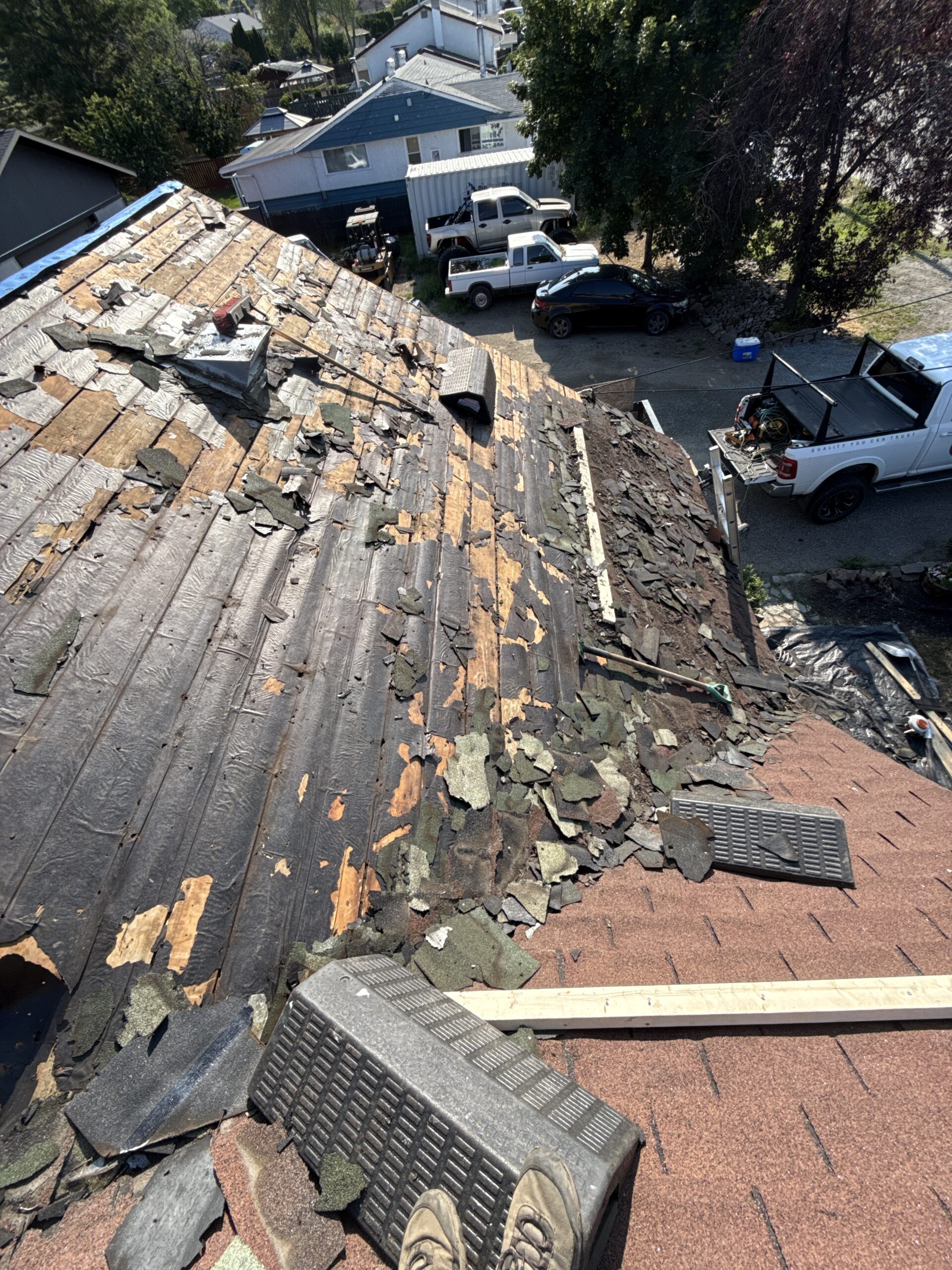
Ask specifically: is tear-off and disposal included in this price? If a quote is unusually low and this line is vague or missing, that's a red flag worth investigating.
Decking inspection and repairs
Once the old roofing material is removed, the contractor can inspect the wooden decking (sheathing) underneath. In older Kelowna homes especially, it's not uncommon to find soft spots, rot, or damaged sections that need to be replaced before the new roof goes on.
Most estimates will note that decking repairs are "billed separately if needed" — this is completely normal and honest. What you want to see is a clear per-sheet rate for replacement, so there are no surprises if the crew finds damaged wood on install day.
Permits
Here's something many homeowners don't realize: a permit is generally not required for a standard roof replacement in BC. If you're re-roofing with the same or similar materials — which covers the vast majority of residential jobs — you typically don't need to pull a permit.
Where permits do come into play is when the scope of work goes beyond a straight replacement. If you're making structural changes to the roof, altering the roofline, or adding new roof sections or additions, that work affects the integrity of the structure and a permit will be required.
If your project falls into that category, your estimate should account for the permit fee and the associated inspection process. At Osland Roofing, we'll let you know upfront whether your job requires a permit — and handle the paperwork if it does.
Warranty information
A good estimate should clearly outline two types of warranty:
- Manufacturer's warranty — covers the shingles or membrane against defects (can range from 25 years to a lifetime, depending on the product)
- Workmanship warranty — covers the contractor's installation against defects, typically 1–10 years depending on the company
If warranty terms aren't mentioned in the estimate, ask for them in writing before signing anything.
How to compare estimates fairly
When you have multiple quotes side by side, check each one for:
- Same shingle brand and grade (or comparable product specs)
- Tear-off and disposal explicitly included
- Underlayment type specified
- Decking repair rate listed
- Permit costs accounted for
- Workmanship warranty stated
A lower total price that's missing several of these items is often not actually a better deal — it just moves costs to later in the process, or leaves you with inferior materials.
Ready for a quote you can actually trust?
At Osland Roofing, we provide detailed, transparent estimates for every project — from single-family shingle replacements to commercial flat roofing. No vague line items, no surprise costs. We're proud to serve Kelowna and the surrounding Okanagan communities, and we're happy to walk you through every part of your quote so you know exactly what you're getting.
Request your free estimate today — and feel free to ask us to explain any line item on your quote. That's what we're here for.