
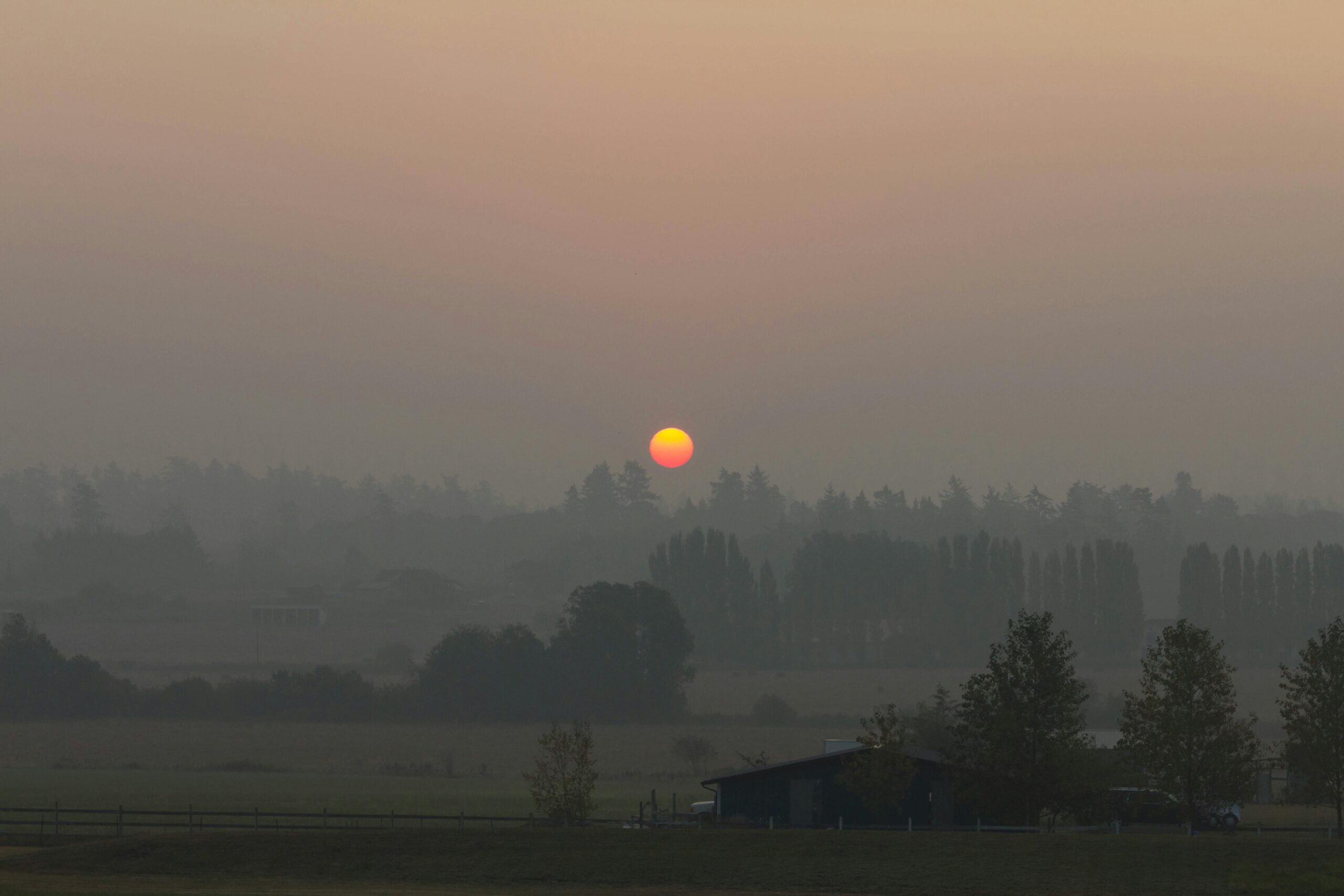
The Okanagan's intense summer sun and wildfire smoke seasons do more damage to your shingles than most homeowners realize. Here's what's actually happening up there — and what you can do about it.
Living in the Okanagan means long, hot summers, breathtaking scenery, and unfortunately, an increasing number of wildfire seasons that blanket the valley in smoke for weeks at a time. Most homeowners think about what that means for air quality indoors — but very few think about what it means for the roof over their heads.
The truth is, your roof takes the full brunt of two of the Okanagan's harshest environmental conditions: extreme UV radiation and wildfire smoke particulate. Together, they can shave years off your roof's lifespan — often without any visible warning signs until the damage is already significant.
Not sure how your roof is holding up after last summer?
Book a roof inspection with Osland Roofing and we'll give you an honest assessment of where things stand.
The UV problem: Kelowna gets more sun than most of Canada
Kelowna averages over 2,000 hours of sunshine per year — one of the highest totals in the country. While that's great news for the wine industry and beach days at Okanagan Lake, it's genuinely hard on roofing materials.
Asphalt shingles are coated with granules that act as a UV shield. Over time, intense sun exposure breaks down the asphalt binder beneath those granules, causing them to loosen and wash away. Once the granule layer is compromised, UV rays hit the asphalt directly — and deterioration accelerates rapidly. You might notice granules collecting in your gutters or downspouts, which is one of the earliest signs this process is underway.
South- and west-facing roof sections take the worst of it, since they receive the most direct afternoon sun. If your home has a mix of orientations, don't be surprised if those slopes show wear years ahead of the north-facing side.
What wildfire smoke actually does to your shingles
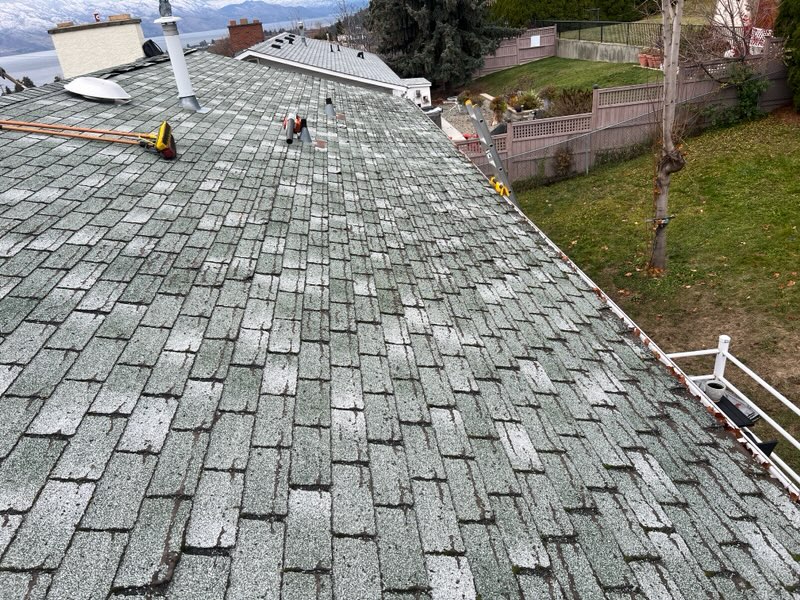
Wildfire smoke is more than an air quality issue. The particulate matter it carries — fine ash, soot, and acidic compounds — settles on every exposed surface, including your roof. Over the course of a smoky season, these particles accumulate in the texture of your shingles and in the valleys and low points of your roof.
The concern here is twofold. First, acidic smoke residue can gradually degrade roofing materials, particularly at seams, flashing edges, and any area where water tends to pool or run slowly. Second, the buildup of organic debris — ash mixed with dust and moisture — creates ideal conditions for moss and algae growth, which brings its own set of problems for long-term roof health.
Flat roofs and torch-on membrane systems are particularly vulnerable to smoke debris accumulation, since their low-slope surfaces don't shed material the way pitched roofs do. After a heavy smoke season, buildup around drains and in low-lying areas of a flat roof is common and worth addressing promptly.
How this affects your roof's lifespan
A quality architectural shingle is rated for 30–50 years under standard conditions. But "standard conditions" are based on average North American climates — not the Okanagan's combination of high UV, dramatic temperature swings, and smoke seasons that have become an annual reality.
In practical terms, Kelowna homeowners should expect real-world shingle performance to land closer to the lower end of a manufacturer's stated lifespan — and should factor in more frequent inspections than someone in a milder climate might need. This isn't a reason to panic; it's just the reality of living in a high-UV, wildfire-adjacent environment, and planning around it is straightforward.
What you can do about it
The good news is that none of this is cause for alarm — it's cause for awareness. A few straightforward habits go a long way:
- Get a professional inspection every 2–3 years, or after any particularly severe smoke or heat season. Catching granule loss or debris buildup early is far cheaper than addressing the water damage that follows if it's left too long.
- Clear your gutters and roof valleys after wildfire season. Ash and debris that sits through the fall and winter traps moisture against your roofing materials — not a good combination going into freeze-thaw season.
- Consider UV-resistant or impact-resistant shingles when it's time for a replacement. Several premium shingle lines are specifically designed for high-UV climates and come with enhanced granule adhesion that holds up better under sustained sun exposure.
- For flat roofs, have drains and low-lying areas checked after every smoke season to prevent organic buildup from accumulating around drainage points.
Choosing the right roofing material for the Okanagan climate
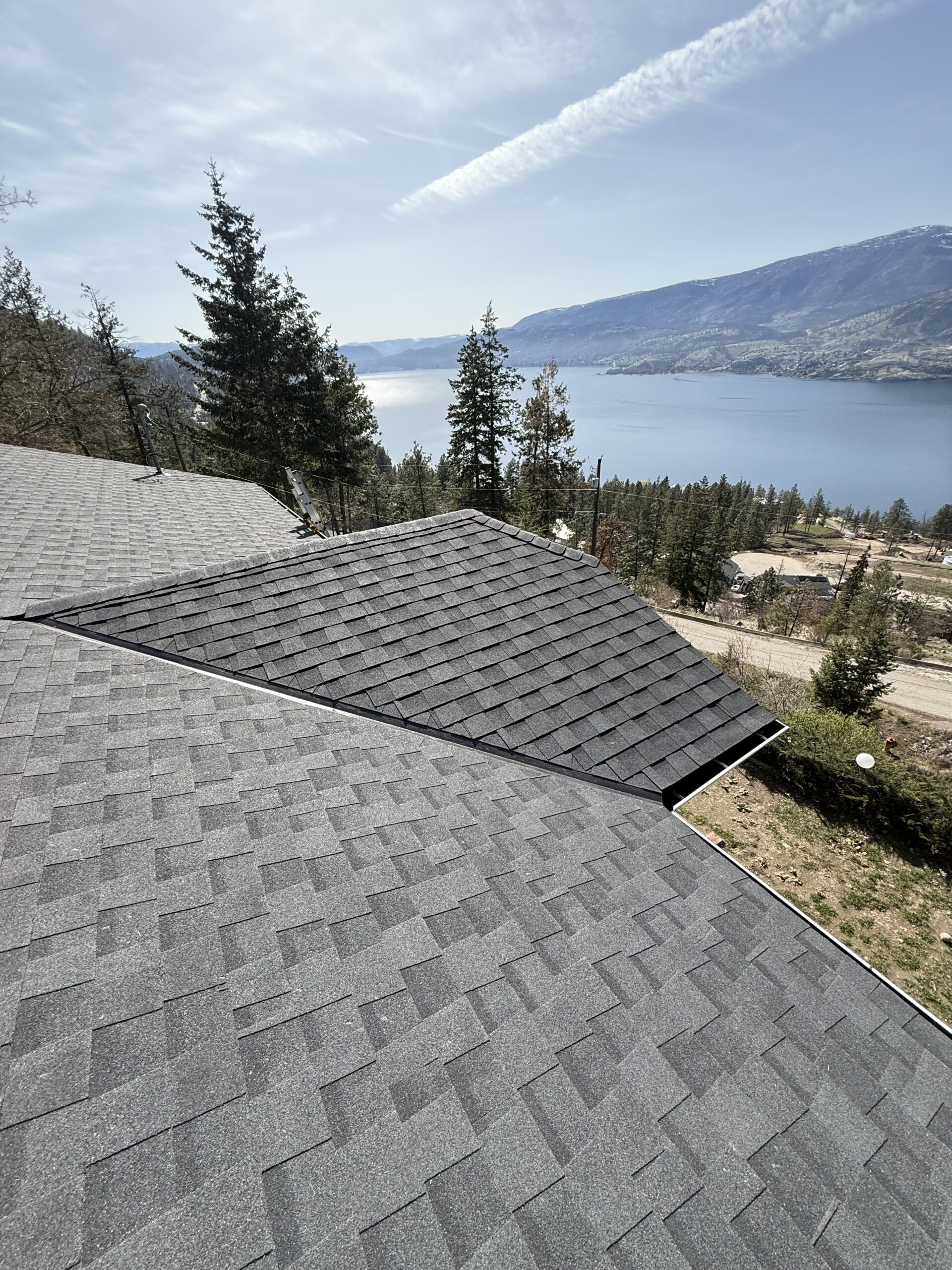
If you're due for a roof replacement in the next few years, it's worth having a conversation with your contractor specifically about UV performance and regional climate suitability — not just price per square. At Osland Roofing, we work with products that are well-suited to what Kelowna actually throws at a roof, and we're happy to walk you through the options that make sense for your home and budget.
The bottom line
The Okanagan is one of the most beautiful places in Canada to live — but it comes with a climate that demands a little more from your roof than average. High UV, smoke seasons, and dramatic temperature swings are all part of life here, and a roof that's well-chosen, properly installed, and periodically maintained will handle all of it without issue.
The homeowners who run into trouble are usually the ones who haven't had eyes on their roof in five or more years. A quick inspection after a rough season costs very little — and can save a lot.
Ready to get your roof checked out?
Osland Roofing offers free estimates and honest assessments for homeowners across Kelowna and the Okanagan. Whether you're concerned about UV wear, smoke damage, or just haven't had an inspection in a while — we're here to help. Request your free estimate here.